Shangrila, Yunnan, China

Shangrila, Yunnan, China
Perrin, Oona and Otis do the dishes at 12,400 ft in the rain with Kevin
Showing posts with label Perrin. Show all posts

Thursday, June 27, 2013

35 Kids in a Room


BY PERRIN

Kindergartens are rowdy places... this one's rowdier.  Kindergartens are noisy places... this one's noisier.  Kindergartens are places with toys and colors... this one doesn't have any.  What does this one have?  It has books, pencils, backpacks, desks, chairs, and a loud teacher in a room of 35 five-year-olds... to whom we had to teach English.


We are in Xizhou, a village about 20 minutes away from Dali, in southwestern Yunnan province, a popular tourist destination with streets full of buyers and sellers.  We are here for two weeks so we wanted to do something to help the community.  We decided to volunteer at a local kindergarten/preschool right down the road from where we are staying.  We didn't know what we were in for.


The first day, as we walked to the school with my mom, Andrew, who helped us set up the teaching, told us that the teacher was "super nice" and would help us for the first day and tell us what to do.  I was happy about that and expected to see a room full of toys and kids playing.  I was in for a big surprise.


When we got there Andrew introduced the teacher to us and I looked around.  All the kids were in their classrooms and I could see that the ages ranged from 3-6, depending on the class.  The children were all crammed at desks or wandering around aimlessly.  Some were practicing their Chinese characters while others stared at us like we were aliens.  Andrew and my mom left and the teacher ushered us into the older kids' classroom (5-6 year olds) and gave us a bucket of plastic fruits and tiny animal figurines.  My sister and I stood there in the front of the class speechless and confused.  We were supposed to stand there for an hour and make 30 kids say fruit names?  The teacher looked at us expectantly as the kids' chatting grew louder, so I did the only thing that made sense.  I took the apple out of the bucket, held my hand up and said, "APP-PLE."  The class quieted down somewhat and about half of it echoed, "AP-PLE."  I said it a few more times and then took out the banana and taught them BA-NA-NA.  After about half an hour of that, the kids understandably started to get restless and some started wandering around in and out of the classroom.  Two kids at the back of the classroom actually walked out the door and then climbed back in through the window onto a desk!  The teacher was in the back picking her wart with a needle and ever ten minutes soured, "AN JING!" which means QUIET!  We got through the whole hour, though not very gracefully, and knew that we needed a lesson plan for the next day.


That night, our mom, a Montessori teacher, and Andrew, who had taught English to kids before though in a much easier environment, helped us plan a lesson and Andrew taught with us the next day.  We played a few games and only the ones that we attempted to do outside totally failed. All the other kids came out of their classrooms to watch us and there was too much noise and distraction.  However, it went much better than the day before.


The rest of the week went reasonably well and so did the next week, but it surprised us how hard it was to find games that would work with that many kids in such a tiny room.  We looked at a website that Andrew had used when he taught English to kids in China, but most of them required more space than we had, so we only found about 5 games that would work.  Andrew was surprised at how hard the teaching was and what a contrast it was to his prior experience teaching in Hangzhou.  There, he had only ten well-behaved kids in a big room.


It was useful to learn what the hardest kind of teaching is like.  After this, any other teaching will be simple.  I am glad that we did the hardest teaching first so whenever we're in another challenging teaching situation, we can always say, "We've had worse!"

Tuesday, June 18, 2013

White


BY PERRIN

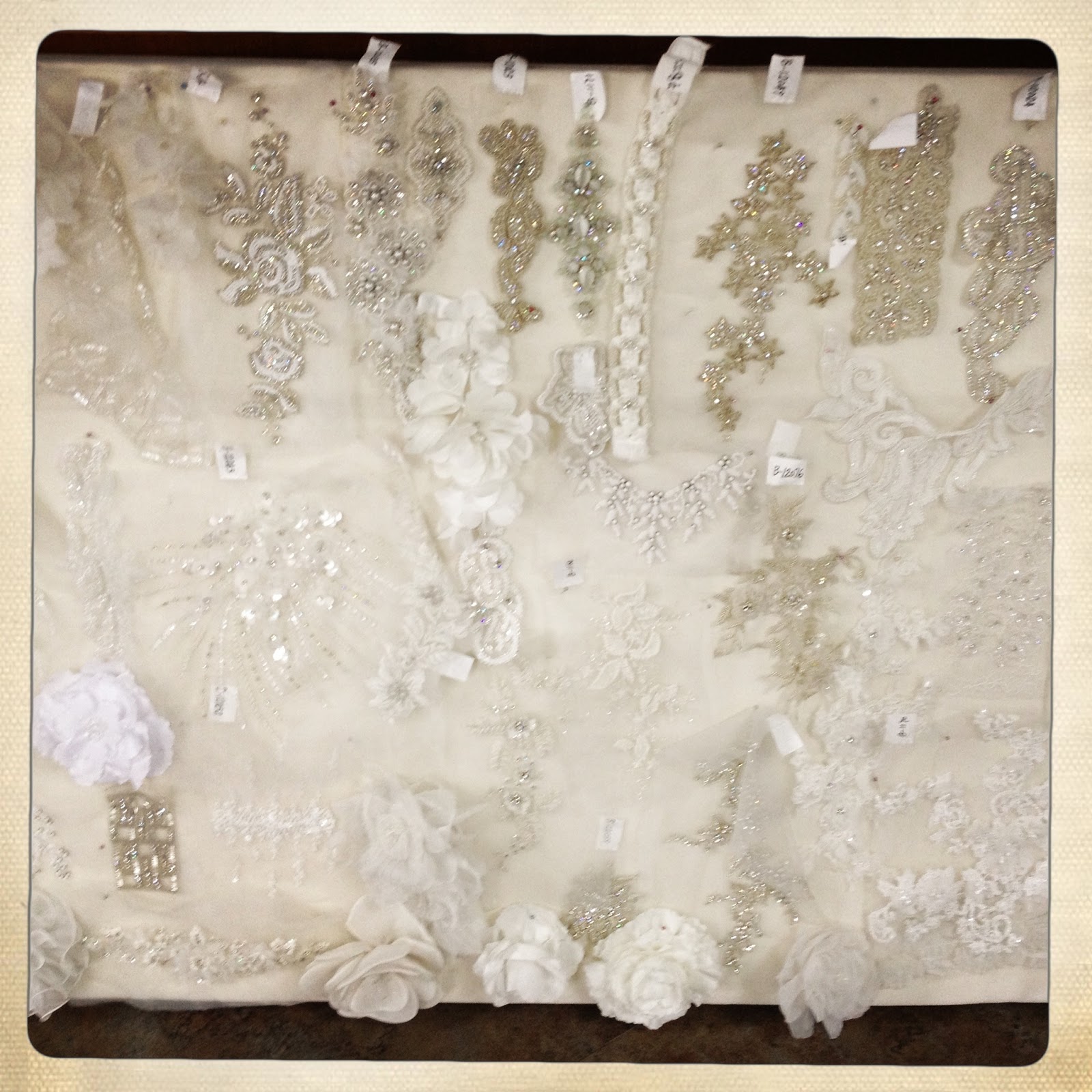
When we left Taiwan, we wanted to take a trip with our Taiwanese friends, Frank, Jennifer, Julian (4), and Ning Ning (1) to say goodbye.  We first visited Jinmen, an island that is part of Taiwan but is right off the coast of China.  Then we went to Xiamen, which is a city on the south coast of China about 20 miles away from Jinmen.  Jennifer's dad owns a wedding dress factory in Xiamen and he and his associates gave us a tour.


First we explored the cloth storage room where hundreds of bolts of cloth were stacked on the floor and all the way up to the ceiling.  There is one person who examines each and every bolt of cloth for holes and flaws and if they find one, they put a sticker on it so it doesn't end up in the dresses.  The first floor is where the skirts of the dresses are made.  There were people cutting, sewing, pinning, unpinning, lacing, and folding the cloth that would result in beautiful dresses.  


One thing that shocked me about the factory is that EVERYTHING was WHITE.  The room was white, the cloth was white, the lace was white, the sewing machines were white, and everything not white was covered in something that was.


Pleating

Taking out pins

The second floor was where the bodices are made and sewed onto the skirts.  Jennifer's dad told us that pleating (making lots of little folds) is one of the hardest things to do while the task of taking out pins is the least difficult.  This room looked similar to the room below except the work was more detailed and looked more like a dress than just white cloth.  People were fitting the dresses to cloth mannequins, which were sized from 1 - 32.  The largest mannequins are called "big mamas."  Jennifer explained that most of the "big mamas" are for Americans but the factory sells the most dresses in Spain.

"Big Mama"

The third floor was for beading and the finishing touches, but the designers worked there too.  The factory has 1,000 different designs of dresses each made with different cloth, shapes, beads, and sizes.  They also make custom dresses designed to fit individual people.  


Carly and I got to try a few on and it was really funny because they didn't fit very well.  I liked the longer dresses while Carly's favorite dress was a medium length and the skirt was made up of enormous, spirally flowers.


Giving the mandatory "V" signs


That night we had a great time with Jennifer's family and her dad's business partners singing, dancing, playing an accordion and being silly at a delicious dinner before practically sleep walking to bed.  I had learned a lot of random facts and interesting information about wedding dresses, cloth, lace, and design and was ready to go to sleep.  It had been a long day of traveling and wedding dresses.


Thursday, June 6, 2013

Puppets In The Rice Fields


BY PERRIN


Vietnam has many rice fields.  Actually, the majority of the Vietnamese are farmers.  All day they harvest or plant or tend their fields under the hot Vietnam sun with their conical bamboo hats and towels wrapping every piece of exposed skin.  But they are people, and people like to have fun.  They must have had some kind of entertainment while working in the rice fields... So what was it?  They invented water puppets!  Water puppets are wooden figures about a foot tall that have movable joints controlled by strings.  They are made out of the lightweight wood from a jackfruit tree so they float and then are lacquered with bright colors so they are waterproof.


We went to a tiny village in Vietnam to see a water puppet show and we loved it!  Instead of doing the show in the rice fields like they did in the 11th century, the puppets were performed in a big, rectangular, concrete, manmade pond in the middle of the village.  The water was far from clean and there was a big structure that looked like an ornate temple on stilts in the middle of the pool.  We watched as the show started with the music and voice accompaniment coming from a shaded area to our right.  The voices were high pitched and screechy and the instruments were all traditional Vietnamese instruments including drums.  There was also a man narrating the play but we couldn't understand him because he was speaking Vietnamese.


The puppets started appearing from behind the cloth hanging in front of the temple structure.  They paraded in the water around the front of the pond.  After the parade, two puppets came out and started fighting with each other and then some water buffaloes fought too.  The whole scene looked incredibly real and the people controlling the puppets were all the way behind the screen!  I can't imagine being able to do that.  The other scenes were of traditional fishing techniques and an intriguing scene of frog fishing.  The puppeteers made a puppet holding a fishing pole hook the line onto a frog puppet.  It was incredible how they maneuvered the puppets while the puppeteers were more than 2 meters away!

Our tour guide, Diep, translating the explanation of the water puppets.

When the show ended after about 30 minutes, we were invited to go back to where the people controlling the puppets were.  Putting on puppet shows wasn't their job but they did it for fun.  Most of them were farmers.  When we went behind the screen and structure, we saw that the men were up to their chests in water.  Two of them were on a platform not in the water so they could hand the puppets to the people in the water.  The puppets were on long sticks and had strings to control them but lots of them require several people to make them work.  All of the farmers have had years of practice to learn how to work the puppets and sometimes even carve them.  When we had to leave, we said, "Gam un," which is thank you in Vietnamese.  I loved the show and learning about this incredible Vietnamese tradition.  It is amazing that it has survived for 1,000 years and I hope the tradition isn't forgotten in the future!


Tuesday, May 28, 2013

Scuba Diving in Koh Tao, Thailand


By Perrin


Koh Tao is a tiny beautiful island in Thailand and is famous for its beautiful scuba diving and snorkeling. To get to the island, you have to fly to Koh Samui, a bigger island south of Koh Tao. Then you take a ferry from Koh Samui to Koh Tao. Koh Tao isn’t as populated or touristy as Koh Samui, but it has many foreigners who come for scuba diving, snorkeling and the beautiful island scenery. We were some of them.

        
When my uncle E-pi, Carly and I had settled into our hotel room and my parents into theirs, we rented mopeds and drove down to the main town in Koh Tao, where the boats dock, to rent snorkel equipment and arrange scuba diving for the next day.
        The next morning, we got to the scuba shop after a great breakfast at a cafĂ© called “Zest,” feeling a little nervous. My parents were already there because they were doing a diving refresher course.  A woman walked up to us and happily said, “Hi! I’m Sarah and I’m going to be your instructor today.” She brought us upstairs to a little room and taught us the rules of scuba diving and about the equipment. Then we tried on the gear to see what size we were. When everybody was ready and all the equipment was in the boat, we got into a small long tail boat that took us to a dive boat. We were going diving at a place called “Japanese Gardens,” and on our way to the site, Sarah told us about it. She explained that we would see many different kinds of fish and since we couldn’t talk underwater, we would have to use hand signs to communicate and to describe to each other what kind of fish we saw. She told us that there were TONS of Sargent Major fish, little black and white and yellow striped fish, and little fish that nibbled your dead skin. 


She also told us about trigger fish that are the shape of a football but much bigger and have a fin that goes up and down when they are angry or scared.  If you notice a trigger fish with a fin that is going up and down, you don’t want to go too close. If the fish feels threatened, it might charge and bite with its round, funny buckteeth.
        When we were finally all ready in our scuba suits and vests and tanks, we jumped in the water.


It was about 10 meters deep, so I felt a little scared, but once I looked down and saw the beautiful fish, I wasn’t scared anymore.  We then swam to the beach where we could stand in the water. We went over the rules again and the usage of our equipment and then started swimming deeper to where the bigger coral and fish were.
Going over the rules

Carly
Me
Carly
My uncle E-pi
Me
        
It’s surprisingly difficult to balance under water and to control your buoyancy so you don't hit any coral, so Sarah had to hold on to our tanks and guide us at the beginning. We saw beautiful sea anemones with fish that look like clownfish swimming amongst the anemone’s tentacles. 

 A sea anemone
A barrel sponge
A fake clownfish in a sea anemone
There were also corals that looked like bonsais, and that is why the dive site was called Japanese Gardens. There were banner fish, angelfish, butterfly fish, rabbit fish, parrot fish and thousands of other tiny, colorful fish. 

A big Grouper

A banner fish
On my second dive we were lucky enough to see a moray eel! It swam all the way out of the rock, a behavior that apparently is rare. There was also a huge trigger fish that was a little scary. Almost every square foot of coral had little Christmas Tree worms that look like little colorful Christmas trees stuck to the rock. When something goes close to them or if you disturb the water around them, they immediately suck themselves into the coral and disappear. They are all kinds of colors but most often they are orange, yellow, purple, blue, or tan. I loved waving the water around them and watching them retreat into the coral. 
Christmas tree worms


We didn't see many sea stars, but the one kind that we did see was called the Indian Cushion sea star. It was given that name because it actually does look like a cushion in a vague shape of a star. 
Indian cushion sea star

Everything underwater was unbelievably beautiful and looked like it came out of a movie!
       Scuba diving was such a fantastic experience and I am so glad we tried it in Koh Tao. Although there were some difficult things about diving, overall it was amazing to breath underwater like a fish. It was also a chance to meet new people from different countries and learn about them and how they got into diving. Most of the people on our boat were British, Scottish and Irish, so we heard a lot of different English accents.  I am looking forward to diving again some time in the future!

My dad
My mom and dad